Finding the South in New Suburbia
October marks my anniversary. I've lived in North Carolina for twenty-one years now. That realization brings a certain introspection: I've lived here longer than anywhere else I've ever called home. It raises a fundamental question: Is this my home now? Has its distinct sense of place come to define me?
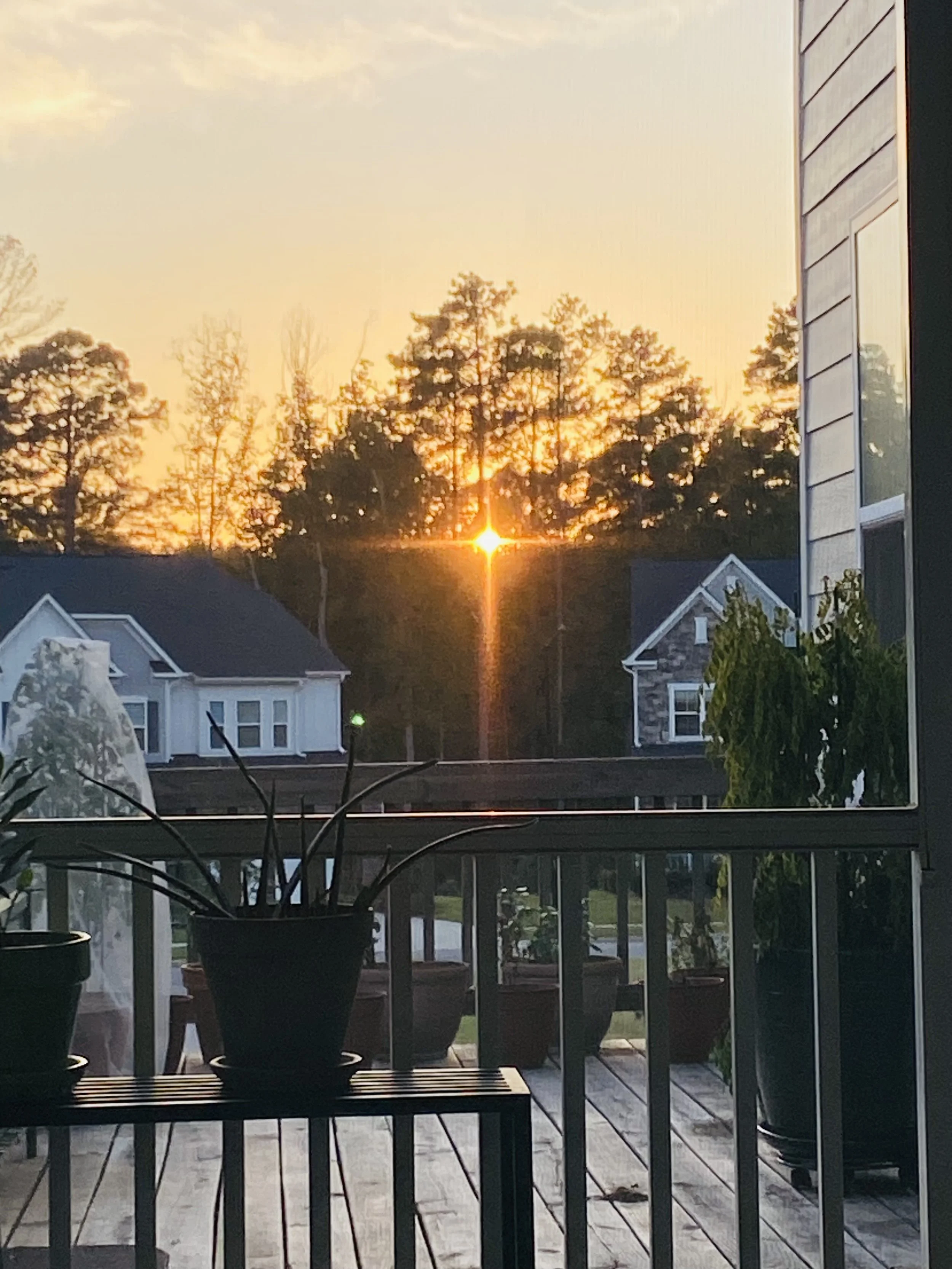
When you move into a modern neighborhood carved from the Southern landscape, you're forced to grapple with what the South actually is. Looking out at identical vinyl siding, manicured lawns, and cul-de-sacs bearing the names of cleared-away woods, you wonder where the true spirit of the South resides. Has it simply been swallowed by development, or does it still exist somewhere among those neatly aligned rows of suburbia? Perhaps it's hiding in a lost delivery of fruitcake.
There is always a period of adjustment when moving here. I still remember trying to purchase wine at a grocery store on a Sunday morning during my initial visit to North Carolina, back when strict Sunday Blue Laws barred wine and beer sales before noon. The response was immediate: “Son, you ain't from around here, are you?” That night over dinner, my wife and I asked ourselves, “What are we getting into?”
Upon returning to California to pack our moving boxes, however, North Carolina began extending a hand. A couple of my clients were from the state. When I told them about the pending move, they gave me phone numbers, encouraged me to get in touch when I arrived, and assured me I'd be welcome. Their hospitality softened the disorientation of starting over, even easing the memory of that failed Sunday wine purchase.
The week after arriving, a lunch invitation from one of them took me on my first road trip to Raeford, in Hoke County, and the Edinborough Family Restaurant on Main Street. It was a fifty-year-old institution where diners could join in prayer before meals and where everyone seemed to know one another. I remember the warmth of that room, the easy familiarity among its patrons, and the sense that I had been welcomed into something already in motion.
That lunch was when I began to understand that finding my place in the South wasn't a passive exercise. Belonging required participation. Feeling connected to a place meant moving beyond our own front doors and becoming invested in the landscape and the people around us.
Not long afterward, a second invitation arrived, and I found myself in Johnston County, participating in the preservation of Bentonville Battlefield, site of the largest Civil War engagement in North Carolina. I remember my former client's warmth that morning when we met in person for the first time. After a hearty handshake, he announced, “A new North Carolinian has joined us, and together we're going to restore this battlefield!”
Years later, a remarkable detail surfaced: this was the very battlefield where my own ancestor had fought as a Union cavalry officer. I hadn't merely helped preserve a piece of someone else's local history. I'd unknowingly helped protect ground on which my own family history had unfolded. What began as an effort to connect with my adopted home had revealed a connection that had been there all along, far older than I could have imagined.
Over the years, I've found the South just as much in its living culture as in its archives. As an interracial couple, with my wife Gujarati and me a Caucasian mutt, we felt an immediate cultural resonance when we read an article about James Beard Award-winning chef Vishwesh Bhatt, based in Oxford, Mississippi. His approach to Southern cooking, including traditional mac and cheese seasoned with Indian spices, reflected something of our own life: the blending of traditions, the meeting of cultures, and the discovery that embracing one part of ourselves doesn't require leaving another behind.
His cooking offered a familiar expression of something we'd come to appreciate about the South itself. Its traditions are deeply rooted, but they aren't frozen in time. They evolve as new people arrive, bringing their own histories, flavors, and experiences. We didn't move here to remain insular transplants. We came willing to contribute to the region's evolving story and to create a place where the next generation could belong to both the old and the new.
Our roots have taken hold through these layered connections. Whether sharing a meal at the Edinborough, helping preserve Bentonville Battlefield, or enjoying the cross-cultural comfort of Chef Bhatt's spiced mac and cheese, we've found our place in the life of this region. My roots are here now. I haven't erased where I came from; North Carolina has made room for my story within its own historic, complicated, beautiful past.
- 🍇 -
Photo Credit: Nate Goetz